In 2017 I had a +6 % yield over 180 slips and thought I had cracked it. In 2018 I had −4 % over 220. That is when I started recording the closing odds. My CLV in both years was +1.5 %. The difference was luck. The signal was the same.
The definition
The closing line is the price the market offers at the moment the match starts — the last before the market closes. Closing Line Value (CLV) is how much better the odds you took were compared with it, margin removed.
Why it is “right”
By kick-off, all available information and all the money — including professionals and syndicates — have passed through the market. The closing line is the probability estimate with the most information possible. Studies across millions of matches show that, margin removed, it is almost unbiased: when it says 40 %, the event happens ~40 % of the time. No individual bettor’s model comes close.
Why odds move
Money. The operator balances its exposure — when a lot is staked on one side, its price shortens. Information. Absences, line-ups, weather, motivation. Announced, and the market adjusts within minutes. Smart money. When known winning accounts or syndicates bet, operators move the price more than the amount justifies. That is the steam move: a sharp drop across several operators at once, with no public news. Drift. The reverse — the price lengthens because nobody takes it or the money goes elsewhere.
Computing CLV
- Odds you took: 2.20.
- Market’s closing odds: 2.00 / 3.40 / 3.80 → margin 1/2 + 1/3.4 + 1/3.8 = 1.057.
- Fair closing probability: 0.5 ÷ 1.057 = 47.3 % → fair odds 2.11.
- CLV = 2.20 ÷ 2.11 − 1 = +4.3 %.
You beat the market by 4.3 %. Do it systematically, and over time your yield will converge towards your average CLV (minus the margin you paid).
How many slips
CLV stabilises far faster than yield. Over 100 slips, an average CLV of +3 % is already strong evidence; yield over 100 slips has a standard deviation of ±15 % and says nothing. Over 500 slips, CLV +2 % with yield −1 % means “keep going”; CLV −2 % with yield +8 % means “you were lucky, stop”.
What it means in practice
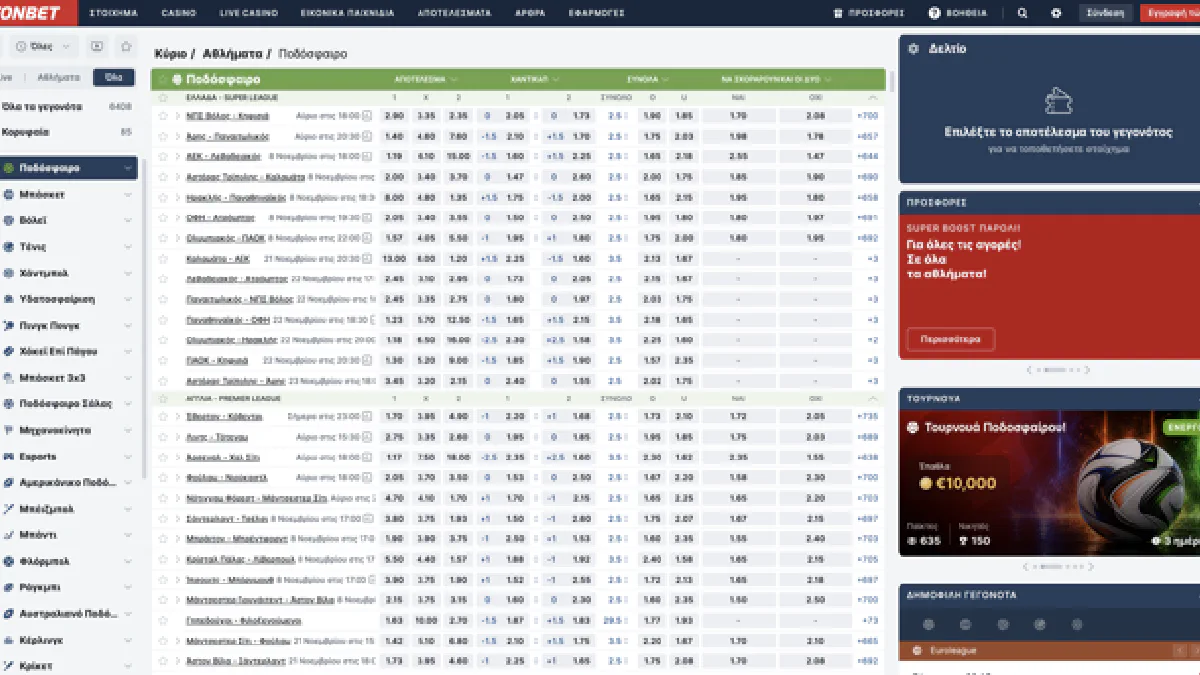
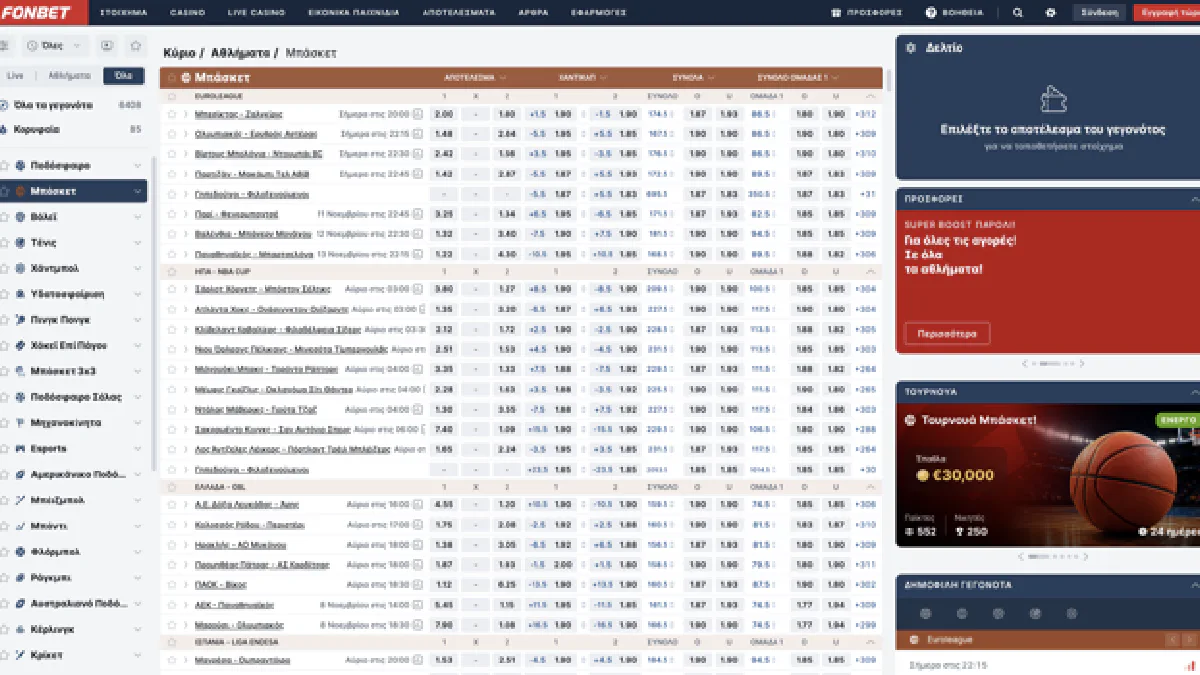
If you do not beat the closing line, you have no value — whatever your balance says. If you do, you have, and the variance will pass. Column 9 in my log is the most important one. To fill it you need a comparison tool that keeps odds history — or simply a screenshot at kick-off. Fonbet’s odds in the major leagues move close to the market; the comparison shows where it leads and where it follows.
FAQ
Which operator's closing line do I record?
Positive CLV but negative yield — what does it mean?
Fonbet Greece — sign up
500 Free Spins and a €20 Free Bet with no deposit using code BOO520