The first thing I look at in a match is not the price of my selection. It is the market’s margin. If it is above 6 %, I look elsewhere — even if I “like” the price.
The definition
The overround (margin, vig) is the percentage by which a market’s odds “exceed” fair odds — the operator’s built-in profit. In a market with no margin, the probabilities of all outcomes would sum to 100 %. In practice they sum to 103–110 %. The difference is the margin.
The calculation
Invert each price (1 ÷ odds), add them up, subtract 1.
AEK–PAOK: 1 = 2.40, X = 3.30, 2 = 3.00. 1/2.40 + 1/3.30 + 1/3.00 = 0.417 + 0.303 + 0.333 = 1.053 → margin 5.3 %.
Same match at another operator: 2.30 / 3.20 / 2.90 → 0.435 + 0.313 + 0.345 = 1.093 → 9.3 %. Same game, almost double the cost.
Typical rates
| Market | Margin (top operators) |
|---|---|
| Asian handicap / Over-Under (2 outcomes) | 2–4 % |
| 1X2 major leagues | 4–6 % |
| 1X2 minor leagues | 7–12 % |
| Correct score | 15–25 % |
| Goalscorer | 20–35 % |
| 4-leg accumulator (5 % per leg) | ~18.5 % |
Two-outcome markets are the cheapest — which is why professionals play almost only Asian handicap and Over/Under. The “fun” markets (scorers, correct score) are paid for dearly. Accumulators compound the margin — the system vs accumulator definition explains by how much.
Removing the margin
To see what the market “believes”: divide the inverse price by the sum. AEK: 0.417 ÷ 1.053 = 39.6 %. That is the market’s probability for an AEK win, margin-free. Fair odds: 1 ÷ 0.396 = 2.53. The operator offers 2.40 — the 0.13 is its share. That “fair” probability is the reference point for every value bet: the question is whether your own estimate is far enough from 39.6 % to cover the margin with something to spare.
(Simple division assumes the margin is spread proportionally; in practice operators load the outsiders more — the “favourite-longshot bias”. For 1X2 the simple method is good enough.)
How I use it
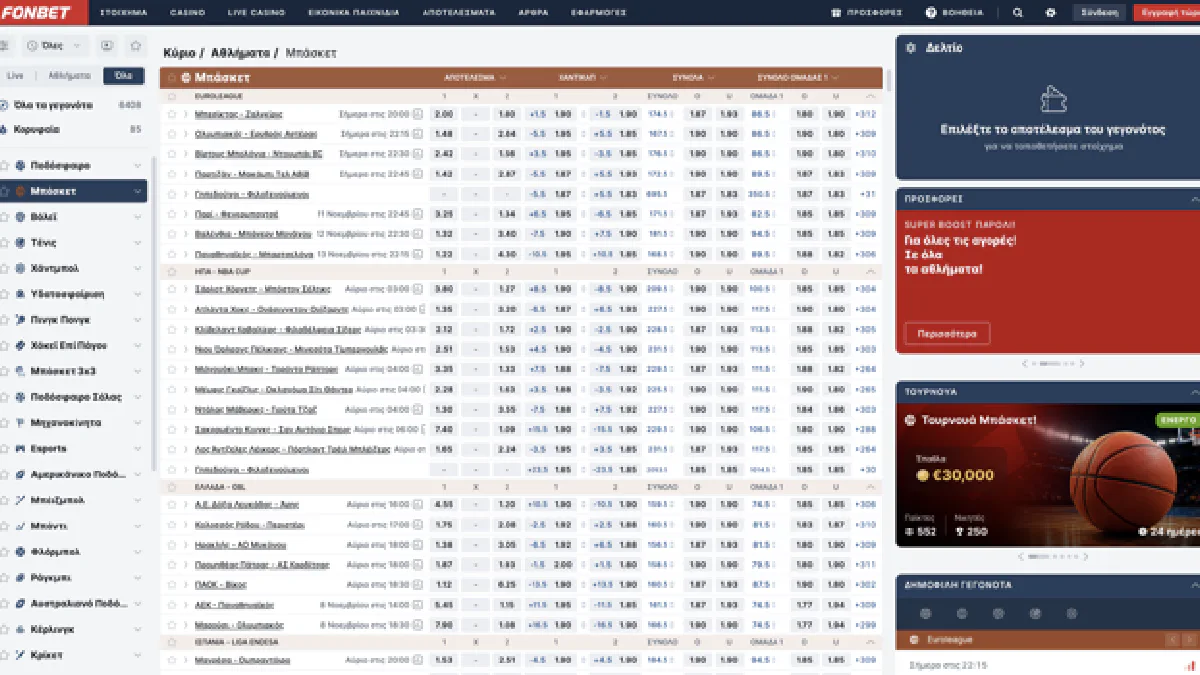
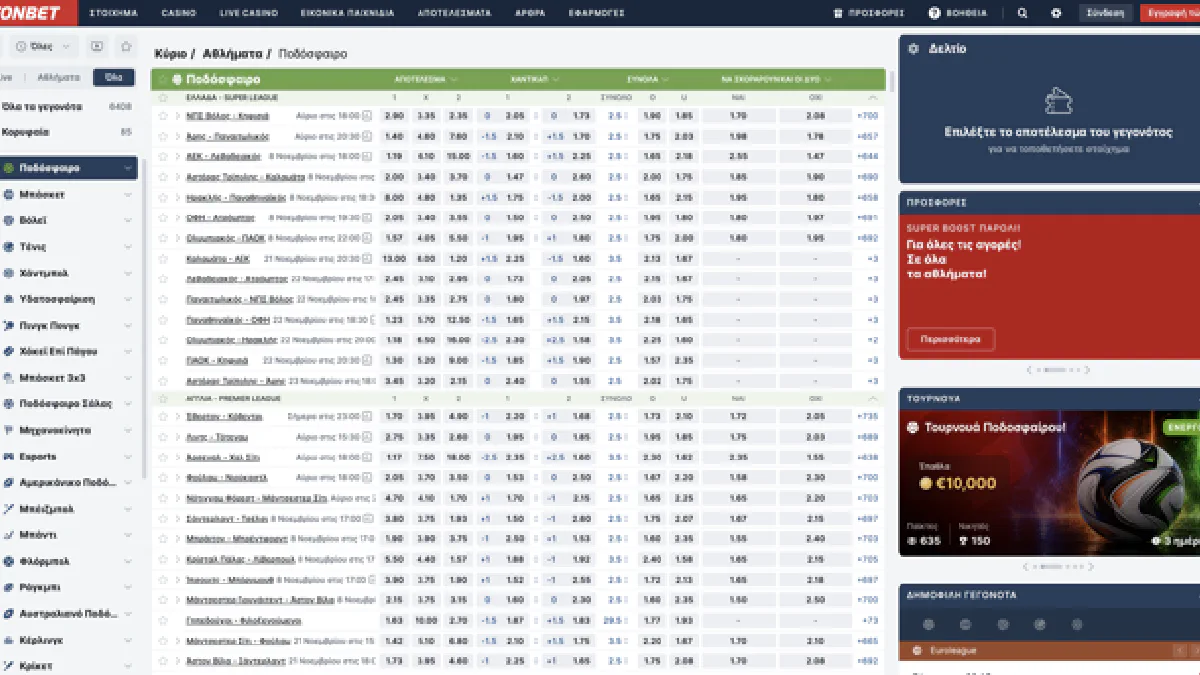
In the log I have a column “market margin”. After 4,000 entries, my yield in markets with margin < 5 % is +2.1 %; in markets > 7 %, −4.8 %. Not a coincidence — it is the entry fee. Odds comparison tools do the calculation automatically for every match; the Fonbet comparison shows in which markets its margin is competitive and in which it is not.
FAQ
Is the overround the same as the operator's profit?
Why does the same operator have a different margin in a different league?
Fonbet Greece — sign up
500 Free Spins and a €20 Free Bet with no deposit using code BOO520